Hot Topics Coming Up in Consultations
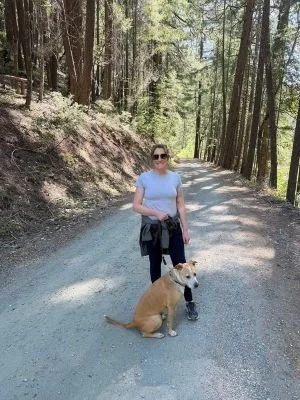
Welcome to July! We are back from our off the grid annual family vacation that fills all our cups! Nature and river time for the family and the dogs! It is a family tradition so well loved by us all. As my dad used to say…sleep when you are tired, eat when you are hungry, so no need to know what time it is. :) My kids literally start counting the days in April.
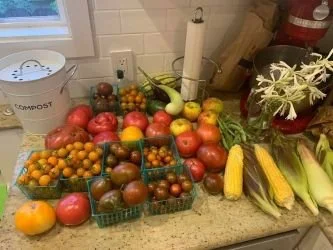
We came home to our garden popping off, some tomatoes ready, a bunch of peppers, cucumbers and so many herbs! What are you harvesting in your garden right now?
Please please support local business in Sonoma County!! If you sometimes frequent them that is great, but even better if you shop there regularly. Just a reminder when you shop at a local business, you are helping the community and an actual person does a happy dance!!
Sonoma county is brimming with so much goodness all year round. Get out for a cheese tour, olive oil tasting or peruse downtown local businesses. Lastly, be sure to take advantage of the U-Pick events being offered by so many local farmers. Also, visit our local produce markets including Tenfold Farmstand. It is the best way to get a taste of the goodness coming from our agriculture community!
There are a few topics that keep coming up in many consultations so I thought it would be fun to address them in more depth here.
Succulents vs Drought Tolerate Plants:
I am having many conversations with clients about succulents and drought tolerate plants. When we think drought tolerant many times the only things that comes to mind are succulents. For many years we were told to build desert gardens with many succulents. While succulents need very little water, which is great, they do very little for helping to build healthy soil. Succulents have very tiny fine, hairy roots that are only a half inch or so.
In order to build healthy living soil - soil that holds, and stores ground water, stores carbon from the atmosphere, and uses it roots to break up hard clay soils we need plants that have good roots systems. Instead of succulents, we plant native gardens that are overfilled with plants. The native plants are from Sonoma County or greater California area. When we plant native plants, they have large root systems that go down deep into soil to get water through our warm summer months. The longer root systems store carbon from the atmosphere as well as absorb all the winter and spring rains we get seasonally.
How much do I water?
“How much do I water?” This is the everlasting question from all my clients. Let’s dig into it. :) It all depends on how healthy your soil is.
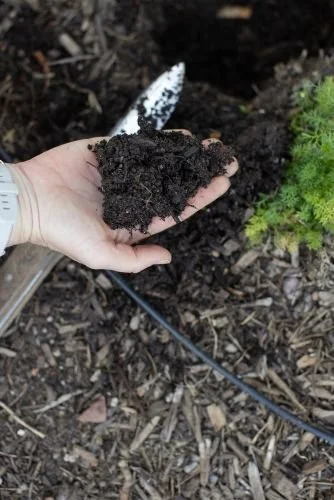
Did you know healthy soil needs much less water. Healthy soil is dark in color, clumps, has worms, organic matter (leaves and sticks) and feels moist to the touch. This type of soil needs less water because when it gets watered it quickly absorbs and holds onto moisture over time. Now think about unhealthy soil. It typically looks light in color, it could be rock hard in texture and is more sandy in nature. It is devoid of nutrients and will allow water to run off not be absorbed taking away all the top soil with it.
When we get a hard rain in west Sonoma county in all our farm lands you will see brown rivers pooling off that are carrying our top soil away.
If your soil falls into the healthy soil category you can probably water every other day or every two days. If plants are new planted, they need water everyday for the first few months (in the heat of summer) to get established. If your soil is on the less healthy spectrum ,then you will want to water everyday because the water doesn’t absorb into the roots of the plant easily.
As we head into the hottest part of the year make sure your irrigation is turned to 7:30pm to water deeply in the evening so it can absorb before the heat of the day the next day.
For either type of soil above, you need a very good absorbent mulch.
Bare Soil and Benefits of Covered Soil:
If you are following along on socials @lumafrontyardfarming you have seen a few videos of me checking soil temperatures in my garden and several neighbors gardens. Soil covered in plants has a significantly lower temperature at about 82 degrees compared to gravel covered or bare soil which can get over 142 degrees. The living plants on the soil are little air conditioners transpiring water keeping plants and soil cool hence the drastic temperature difference. Soil covered in plants literally brings down the temperature of the planet. Stay tuned for next month’s newsletter discussing carbon farming and getting more in-depth into why soil covered in plants are so beneficial.
What To Do In Your Garden This Month
It is finally time to harvest. Are you enjoying the delicious tomato, zucchini, cucumbers and eggplant? Be sure to harvest veggies often to promote new growth, and stop them from getting to big and bitter.
Overwatering tomatoes makes them soggy and flavorless so limit watering of your tomatoes to once per week to keep them happy. Be sure to water all other plants and veggies deeply in the cool evenings or very early in the morning. Add in some rice straw mulch or sheered sheep wool can be used as mulch too, it is extremely beneficial on the hot days to keep moisture in the soil. Be sure to check out the May Newsletter for all the benefits of wool in the garden.
You can still add some winter squash or pumpkins to the garden! I love adding the delicata squash. It is my absolute favorite. My daughter is obsessed with the butternuts too.
I finally made time to watch the Groundswell film… It was so inspirational to see the HUGE increase in number of acres that are regeneratively farmed all over the world compared to a few years ago. Let’s keep spreading the word. Please please share with friends and family how critical it is to know where your food is coming from and support by purchasing goods that are regenerative farmed.
If you want to go back to basics and really understand regenerative farming and why it is so important to shift back to the way the indigenous peoples farmed check out Kiss the Ground. From the creators of Kiss the Ground and Common Ground is the latest film… Groundswell!
Just a reminder, you don’t need a large piece of land to grow produce. We have a small very sunny front yard garden that has 5 fruit trees, so many blueberries, grapes, and pollinators and of course raised beds for tomatoes and other veggies. You can do so much in a small space!! Are you feeling overwhelmed on where to start? We are here to break it down into manageable tasks or of course complete the work for you.
Working together using regenerative gardening techniques in our own gardens is the biggest way to impact on the climate crisis and feel empowered! Adding beauty to our gardens is so great for us and nature too!!