Happy November! It finally feels like fall in the air - thank goodness. I had about enough of the hot days from last month and so have our gardens!
The world seems so heavy and just when it doesn’t seem like it can get worse, a new day brings a new news cycle. I am staying tapped in because I can’t ignore it, but also desperately trying to do what I can to share my opposition to what is going on. Of course voting this Tuesday is key!!
When I feel like the world gets overwhelmingly heavy, I have to turn inward to what I can do. Watching the birds play in my garden, seeing all the bees busy doing the last of the years pollinating! I also revisit my inspiration and why I started this business to begin with… Regenerative Agriculture education and coaching is my true joy! I know that using the regenerative agriculture principles in our gardens and purchasing food farmed using regenerative agriculture methods is the way we heal the planet and ourselves.
I love talking to all of you about what we can do in our gardens to grow food and build healthy soil ecosystems in our gardens. Let’s learn one of my most favorite ways to help the planet, our gardens and our community on our own property.
You may have heard about the upcoming El Nino that is supposed to be coming our way this winter. There are many ways we can prepare our gardens for all the excess rain.
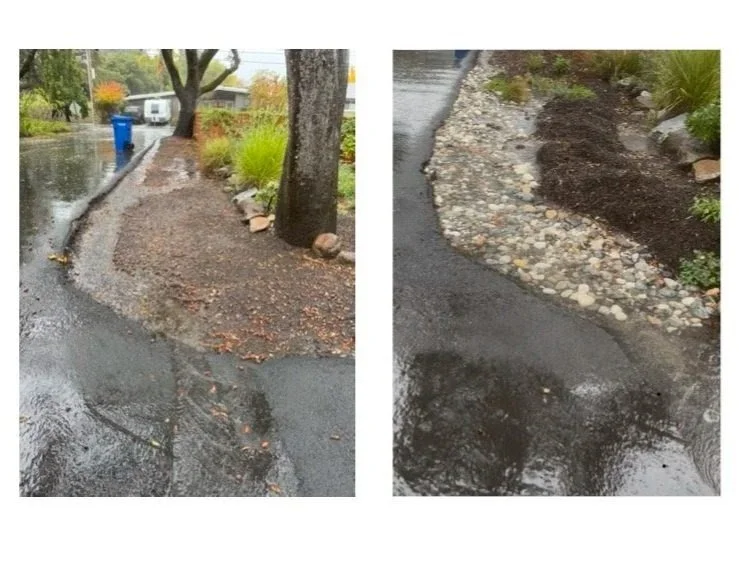
Rain gardens are the absolutely best thing you can add to your home garden that has a huge impact in our communities. Building a rain garden keeps the water from going down the storm drains and fills up our ground water stores. When building a rain garden typically, you follow where the water wants to go by checking for pooling on your property. You can build a rain garden, connecting a pipe to a downspout to let the water drain off in an area that works best for you (away from the foundation and large trees). In the above picture, my client is at the end of her street on a hill and all the water coming from the houses above drains down onto her property. So she had a lot of water coming past her front door. You can see, I followed where the water wanted to go. You can dig a big hole, adding beneficial soil, and mulch. Adding in purposeful, beneficial plants that have massive absorption power with their long roots. Plant several plants in the center of the rain garden.
Here are a few things that you can do in your gardens to prepare:
Cover all bare soil, let weeds come in to help absorb the runoff, or cover with cardboard and then a good mulch (reach out for the best one)
Overplanting in your garden now helps the soil absorb more water to fill our groundwater stores
Cover crop, cover crop garden beds or empty spaces that you can’t buy a bunch of plants for. Planting seeded cover crop areas allows deep roots to go down into the soil to absorb all the rains and also adds beneficial nutrients back to the soil at the same time.
Build rain gardens from downspouts to keep water from going back to the ocean and instead filling our groundwater stores.
Of course, check downspouts for blockages and clear debris from gutters
Turn off irrigation
Reach out with any questions, and if you need our help creating a rain garden at your home, we can help!
What To Do In Your Garden This Month
November is a time for prep, as the garden and all the insects prepare to hibernate over winter. It is better to do absolutely NOTHING than to tidy up and cut everything back or bag up leaves to fill our landfills. PLEASE PLEASE please don’t bag up leaves in a plastic bag to cart away.
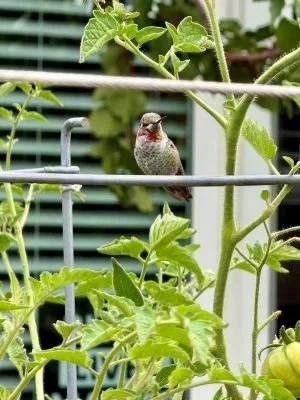
Hopefully, you have left leaf debris and other sticks and seed heads for birds to eat. :)
Continue leaving sticks and allowing leaves to cover bare soil and protect tree roots for winter.
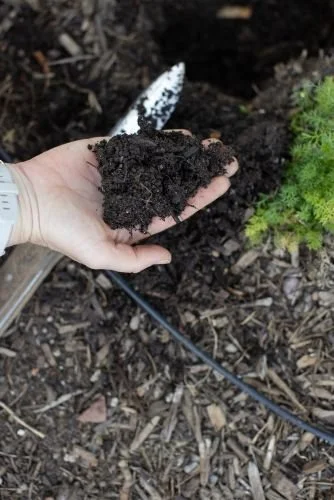
If you have an excess of leaves in an area of your garden, please move them to an area that has bare soil, then cover with a good mulch to feed the soil.
Allow seed heads from zinnias, cosmos, calendula, and echinacea to dry out and stay put attached to plant to feed the birds in winter. :)
Plant natives to cover bare soil for the winter.
Install beneficial rain gardens as discussed and mentioned above.
Lastly, cover crop, cover crop… just a reminder this is planting purposeful seeds to help break up hard clay soils, add nitrogen back to depleted summer gardens, and of course, absorb all the rains with the long roots from the cover crop. For a deep dive into cover crops why - check out the October newsletter.
Thank you for being a part of the journey! I am so glad you are here. Stay tuned for a regenerative gardening class in January.
We grow more than gardens, we create living ecosystems. Luma Front Yard Farming is client led to meet everyone where they are and to allow everyone the opportunity to build an ecosystem and food garden in your home. Seeing our clients fall in love with their gardens and discover the joy of harvesting fruit, watching butterflies, and reconnecting with the outdoors. We teach, not just install.
Get outside and enjoy nature! The benefits are immense to you and our ecosystem!!